
Project Overview
The Smart Thermal Heating Jacket represents a breakthrough in wearable technology by combining innovative heating elements with intelligent temperature control. This USB-powered puffer vest integrates carbon fiber heating pads, automated temperature regulation, and smartphone connectivity to provide personalized thermal comfort in cold environments.
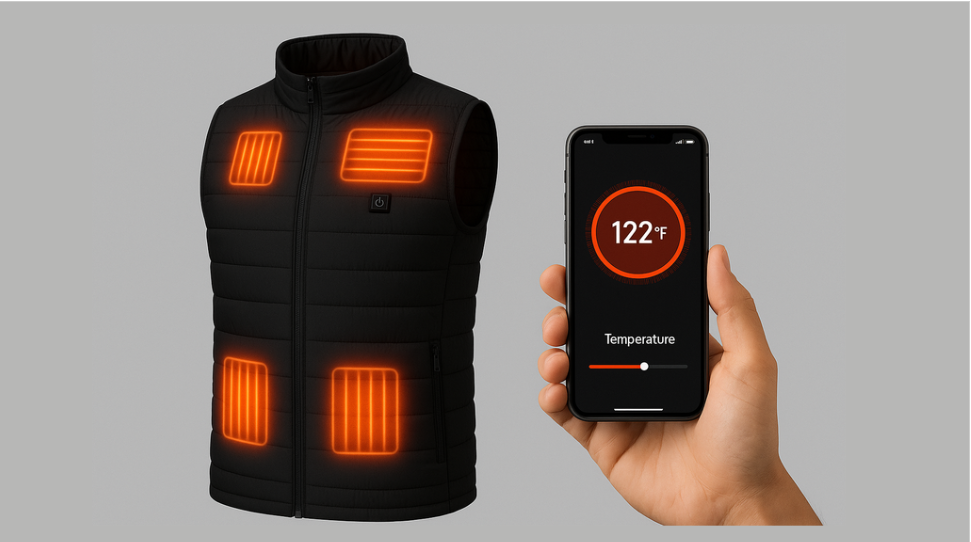
Front view of the smart thermal puffer vest with smartphone control
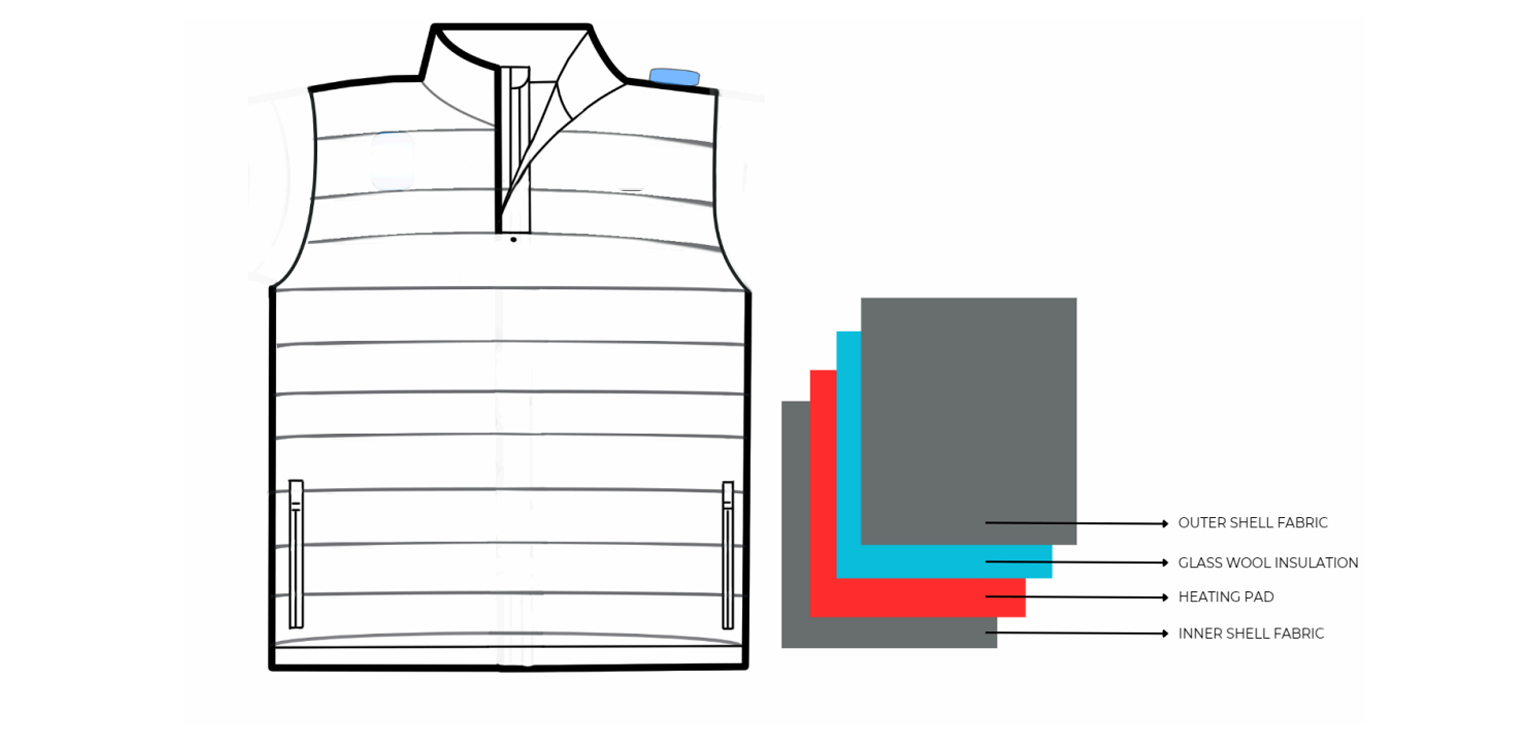
Internal heating components and control circuit
3D Model
Key Technical Specifications
- Microcontroller: NodeMCU ESP32
- Temperature Sensor: DS18B20
- Heating Elements: 5 x USB Charging Carbon Fiber Heating Pads
- Temperature Range: 30-50°C
- Power Source: External USB Power Bank
- Connectivity: Wi-Fi
Heating Pad Placement Strategy
- Two heating pads positioned under the front pockets
- Four heating pads strategically placed on the lower back region
- Placement targets areas with high thermal sensitivity for maximum effectiveness
- Configuration optimized for core body temperature management
Circuit Design & Implementation
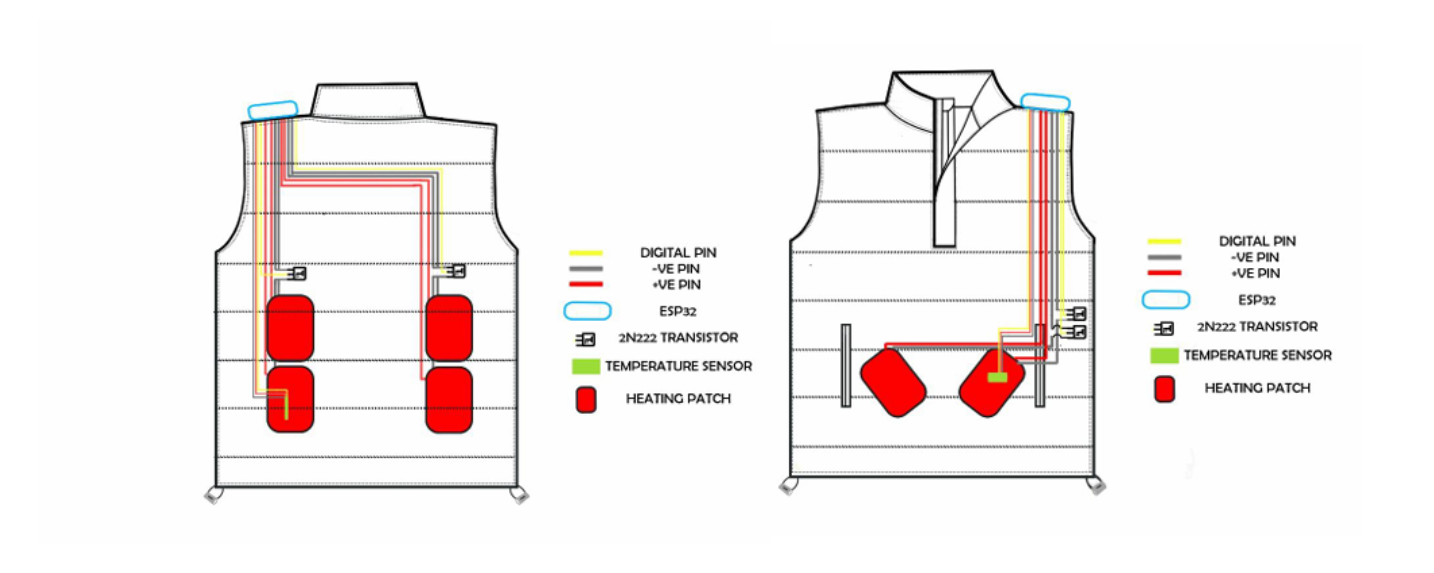
Circuit diagram showing the connections between the ESP32, temperature sensors, and heating elements
Control Logic
Intelligent temperature regulation system that activates/deactivates heating pads based on temperature readings
Temperature Sensing
Precise monitoring with DS18B20 sensors for accurate temperature control
Carbon Fiber Heating
Highly efficient heating elements that provide uniform heat distribution
Power Management
Optimized power consumption for extended battery life from portable power banks
Development Process
Phase I: Research & Design
Comprehensive literature review on thermal sensitivity and carbon fiber heating technology
Phase II: Heating Pad Development
Creation of custom conductive thread-based heating pads with optimal resistance properties
Phase III: Circuit Integration
Development of the control circuit and temperature management system
Phase IV: Garment Construction
Integration of heating elements and electronics into the puffer vest design
Phase V: Testing & Optimization
Comprehensive testing of heating performance and temperature regulation
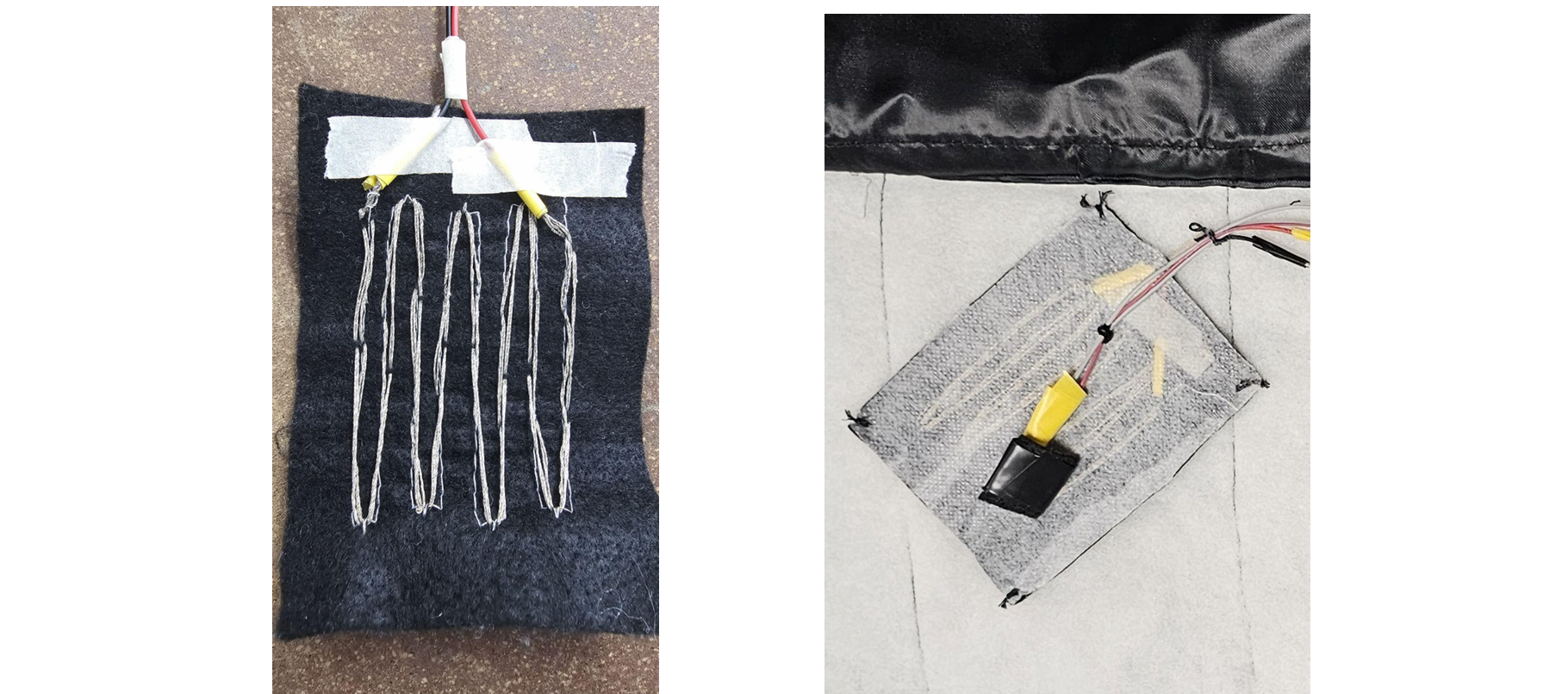
Development of conductive thread-based heating pads
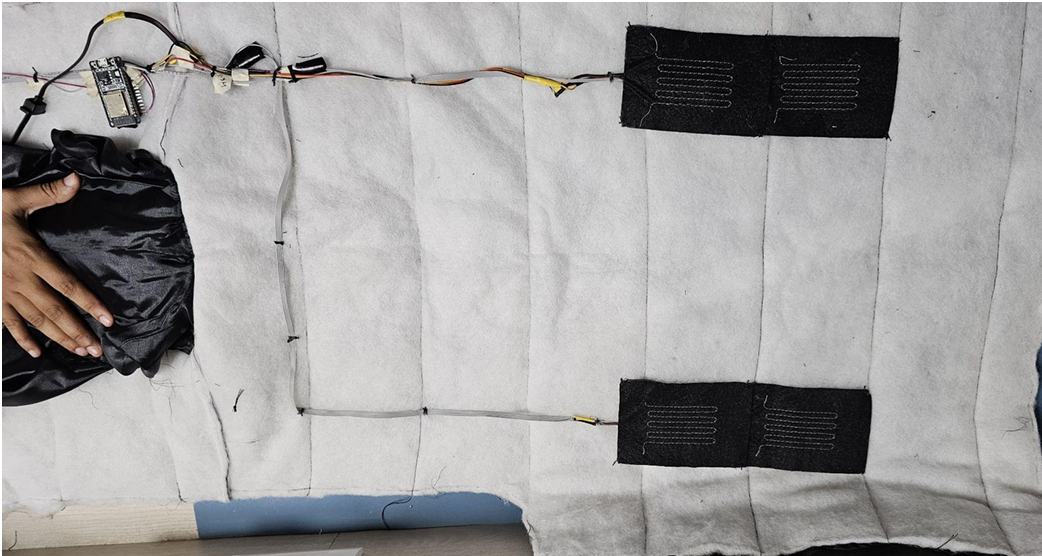
Integration of the control circuit into the jacket
Testing & Results
| Time (minutes) | Pad 1 (°C) | Pad 2 (°C) | Pad 3 (°C) | Pad 4 (°C) | Pad 5 (°C) |
|---|---|---|---|---|---|
| Base (25°C) | 25.9 | 25.8 | 25.8 | 25.6 | 25.7 |
| 1 minute | 45.6 | 40.5 | 47.3 | 47.1 | 41.4 |
| 3 minutes | 45.7 | 49.2 | 49.3 | 49.4 | 49.3 |
| 5 minutes | 44.6 | 43.3 | 43.2 | 42.9 | 43.3 |
| 7 minutes | 43.0 | 45.0 | 45.0 | 43.0 | 49.0 |
Testing revealed rapid temperature increase (within 1 minute) and excellent stabilization behavior, with temperatures maintaining between 42-49°C after 7 minutes. This consistent temperature range provides optimal comfort without risk of overheating.
Key Features
USB-Powered Design
Compatible with standard power banks for portable heating anywhere
Intelligent Temperature Control
Automated system that maintains optimal temperature without manual adjustments
Smartphone Connectivity
Wi-Fi enabled control system for temperature adjustment via mobile application
Lightweight Construction
Breathable and comfortable design that doesn't compromise mobility
System Demonstration
Demonstration of the Smart Thermal Jacket's heating capabilities and temperature control
Applications & Future Development
The Smart Thermal Heating Jacket has numerous potential applications and opportunities for future development:
Outdoor Activities
Enhanced comfort for hiking, camping, and winter sports
Industrial Applications
Improved worker comfort in cold storage facilities and outdoor work environments
Medical Applications
Therapeutic heating for patients with circulation issues or cold sensitivity
Energy Efficiency
Reducing the need for centralized heating in buildings by providing personalized warmth
Future Development Opportunities
- Integration with smartphone apps for advanced temperature customization and scheduling
- Implementation of machine learning algorithms to adapt to user preferences over time
- Development of improved power storage solutions for extended usage time
- Incorporation of additional smart features like activity tracking and posture monitoring
Bill of Materials
| Component | Quantity | Cost (₹) |
|---|---|---|
| USB Charging Carbon Fiber Heating Pads | 5 | 1,913.16 |
| ESP32 NodeMCU | 1 | 455.00 |
| DS18B20 Temperature Sensors | 2 | 350.00 |
| Shell Fabric (100% Polyester) | 4.5 m | 540.00 |
| Fiberglass Insulation | 2 m | 300.00 |
| Electronic Components & Materials | Various | 830.00 |
| Total Cost | ₹4,388.16 | |